Giving the C64 a WiFi Modem
- BigDumbDinosaur
- Posts: 9426
- Joined: 28 May 2009
- Location: Midwestern USA (JB Pritzker’s dystopia)
- Contact:
Re: Giving the C64 a WiFi Modem
Dr Jefyll wrote:
A lot of my keystrokes are backspace.
x86? We ain't got no x86. We don't NEED no stinking x86!
Re: Giving the C64 a WiFi Modem
KC9UDX wrote:
Because you, like me, and everyone else, are unfortunately rigidly accustomed to base 10 maths. :)
- BigDumbDinosaur
- Posts: 9426
- Joined: 28 May 2009
- Location: Midwestern USA (JB Pritzker’s dystopia)
- Contact:
Re: Giving the C64 a WiFi Modem
KC9UDX wrote:
Because you, like me, and everyone else, are unfortunately rigidly accustomed to base 10 maths. 
Actually, in data communications the 10 more often than not has to do with the long-standing TIA-232/TIA-422/TIA-485 data format of 8N1, eight data bits, no parity and one stop bit. Since there is always a start bit involved, 10 bits are transmitted per byte. So an interface running at 115,200 bits per second (bps) has a theoretical throughput of 11,520 bytes per second (BPS). Also, to be pedantic, baud is not bits per second. Baud refers to the signaling or "symbol" rate on the wire, not the bit rate. In the early days, the two were one and the same, but parted company following the development of the Bell 103/212A standard for modems.
BTW, most long-time assembly language programmers are not "rigidly accustomed" to working in base-10. Hexadecimal is the lingua franca of much assembly language.
x86? We ain't got no x86. We don't NEED no stinking x86!
Re: Giving the C64 a WiFi Modem
I have caught myself out a couple of times, thinking that 80 is half of 100, which of course it is in hex, but not in decimal. So, as they say, you can get used to anything. (It's a bit like driving on the wrong side of the road, it's relatively easy, but there's a danger of demagnetising yourself and not being quite sure.)
- BigDumbDinosaur
- Posts: 9426
- Joined: 28 May 2009
- Location: Midwestern USA (JB Pritzker’s dystopia)
- Contact:
Re: Giving the C64 a WiFi Modem
BigEd wrote:
(It's a bit like driving on the wrong side of the road, it's relatively easy, but there's a danger of demagnetising yourself and not being quite sure.)
x86? We ain't got no x86. We don't NEED no stinking x86!
Re: Giving the C64 a WiFi Modem
I think traffic is a bit more lively on this side of the Atlantic - driving in Italy is my most extreme experience. But then, it's a relatively limited experience.
To get back to wifi modems - I've just posted the follow up to my radio broadcasting challenge:
viewtopic.php?f=1&t=4411
To get back to wifi modems - I've just posted the follow up to my radio broadcasting challenge:
viewtopic.php?f=1&t=4411
Re: Giving the C64 a WiFi Modem
Anywhere I've been in Italy is pretty tame compared to larger cities here. But nothing here holds a candle to Shanghai.
BigEd, I think you misspelt licence.
OT: license vs. licence
KC9UDX wrote:
BigEd, I think you misspelt licence. 
6502 sources on GitHub: https://github.com/Klaus2m5
- BigDumbDinosaur
- Posts: 9426
- Joined: 28 May 2009
- Location: Midwestern USA (JB Pritzker’s dystopia)
- Contact:
Re: OT: license vs. licence
Klaus2m5 wrote:
KC9UDX wrote:
BigEd, I think you misspelt licence. 
x86? We ain't got no x86. We don't NEED no stinking x86!
Re: Giving the C64 a WiFi Modem
Sorry about the spelling. Must have been feeling a bit off-color.
Re: Giving the C64 a WiFi Modem
Oh! -- right: color / colour.
I had a feeling you were being humourous.
Even so, it took me a moment...
I had a feeling you were being humourous.
In 1988 my 65C02 got six new registers and 44 new full-speed instructions!
https://laughtonelectronics.com/Arcana/ ... mmary.html
Re: Giving the C64 a WiFi Modem
BigDumbDinosaur wrote:
KC9UDX wrote:
Because you, like me, and everyone else, are unfortunately rigidly accustomed to base 10 maths. :)
BigDumbDinosaur wrote:
BTW, most long-time assembly language programmers are not "rigidly accustomed" to working in base-10. Hexadecimal is the lingua franca of much assembly language.
And this leaves aside the heavily octal nature of 6502 opcodes. Yes, you have to bit-reverse them for it to really show up, but it's plainly obvious once you do. Or you could look at the SPC700 instruction set. I seem to recall that it is suspiciously similar to the 6502 ('c02?) in terms of semantics, but with the instruction bitfields shuffled around and the official mnemonics altered to disguise the fact.
- BigDumbDinosaur
- Posts: 9426
- Joined: 28 May 2009
- Location: Midwestern USA (JB Pritzker’s dystopia)
- Contact:
Re: Giving the C64 a WiFi Modem
Dr Jefyll wrote:
Oh! -- right: color / colour.
I had a feeling you were being humourous.
Even so, it took me a moment...
I had a feeling you were being humourous.
In exploring the etymology of "station," it turns out that it is derived from Anglo-French estation, which morphed into Middle English stacioun. The first known use of "station" as we now spell it was in the late 17th century and early in British railway history, train stations were called stations, not depots (my guess is some 19th century Britons also objected to French words).
So neither group would have been able to eliminate any French from the name of the place where you go to catch your morning train to get to work.
x86? We ain't got no x86. We don't NEED no stinking x86!
- BigDumbDinosaur
- Posts: 9426
- Joined: 28 May 2009
- Location: Midwestern USA (JB Pritzker’s dystopia)
- Contact:
Re: Giving the C64 a WiFi Modem
nyef wrote:
BigDumbDinosaur wrote:
BTW, most long-time assembly language programmers are not "rigidly accustomed" to working in base-10. Hexadecimal is the lingua franca of much assembly language.
x86? We ain't got no x86. We don't NEED no stinking x86!
Re: Giving the C64 a WiFi Modem
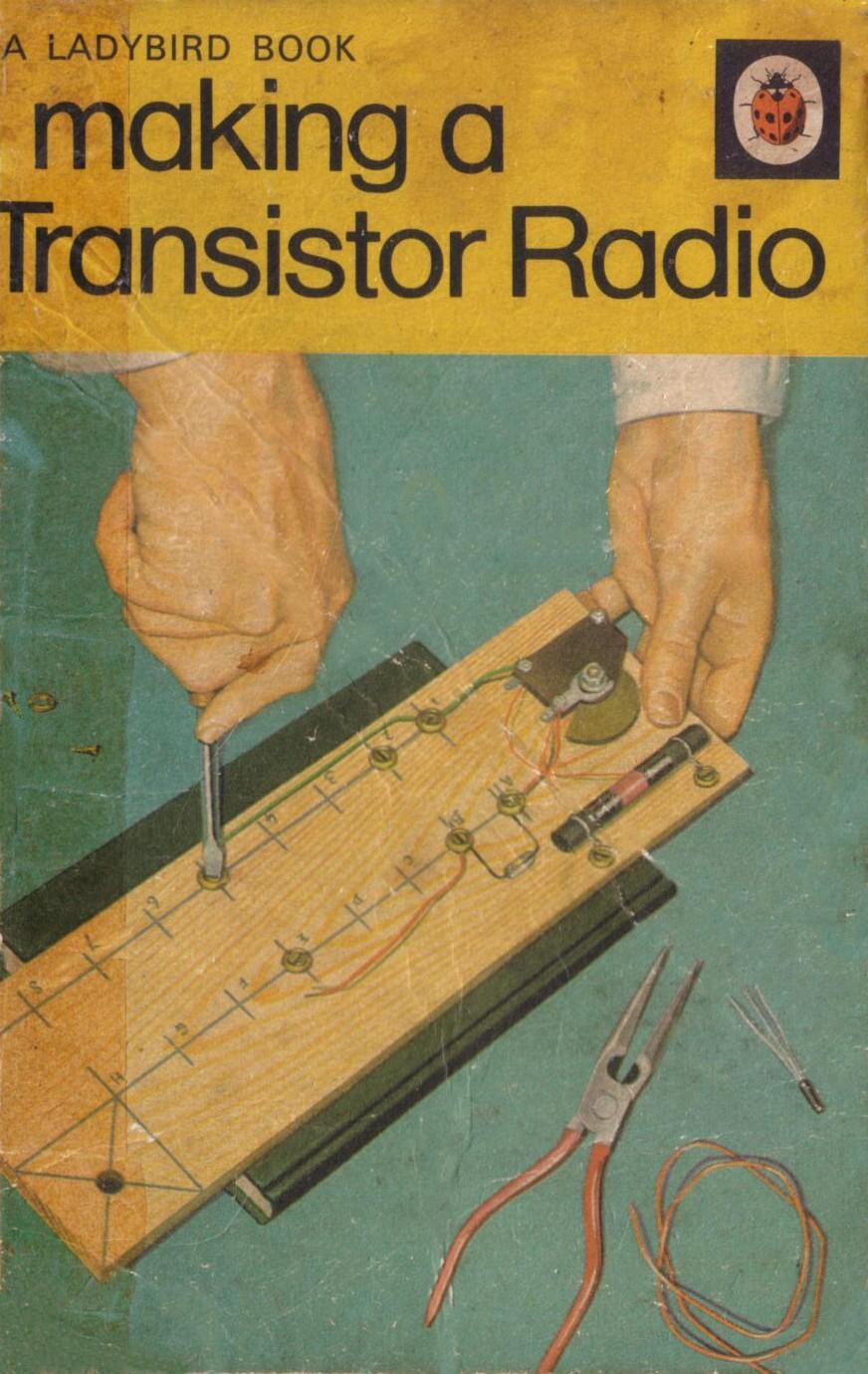
I'm going off-topic again, but I think we have one or two radio enthusiasts on the thread: here's a Ladybird book from 1972, with a charming but serious and thorough explanation of "how to build a transistor radio" - for children, but not only for children.
Two online copies of the book, here and here.
Via this writeup on Hackaday: Books you should read: Making a transistor radio. From the comments, it seems quite a few people got started with this book.

Two online copies of the book, here and here.
Via this writeup on Hackaday: Books you should read: Making a transistor radio. From the comments, it seems quite a few people got started with this book.