
Hello,
When reading the 6502 primer (clock generation topic), I had few generic doubts. Can anyone please clarify them?
1. In the primer, there is a mention about series and parallel resonant crystal. How do we identify one? is there any marking on the crystal? or it is just the connection we make to them?
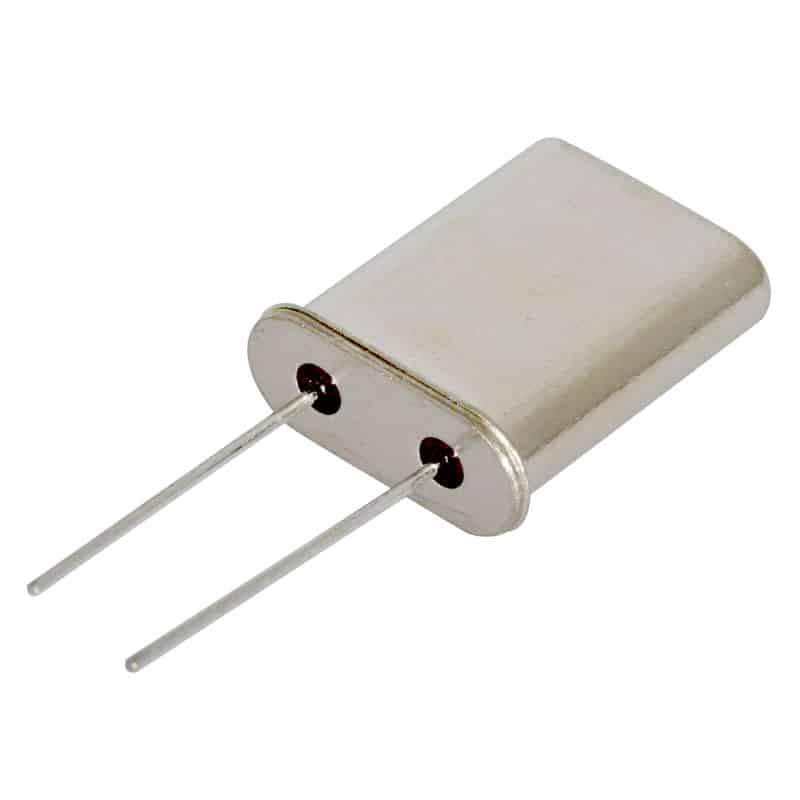
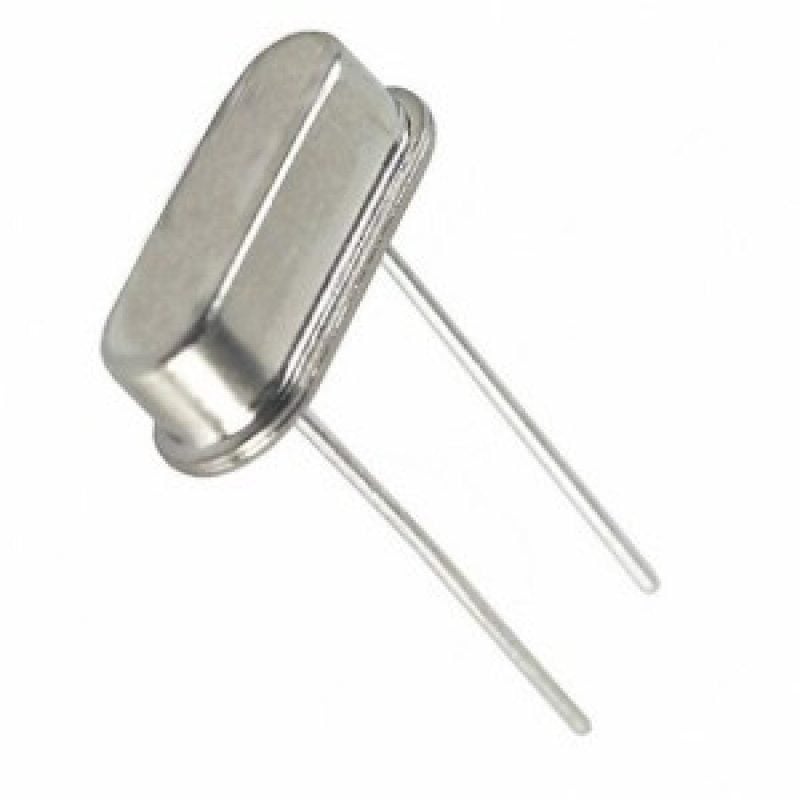
2. In the market, I found two types of through hole crystals (Shape)
https://robu.in/wp-content/uploads/2019 ... ator-2.jpg
https://robu.in/wp-content/uploads/2019 ... 863346.jpg
is there any difference between the two?
3. For dividing the oscillator frequency, is a counter IC reliable? like a decade counter?
Thanks,
[SOLVED] Questions reg oscillators and frequency divider
[SOLVED] Questions reg oscillators and frequency divider
Last edited by claw on Mon Mar 20, 2023 9:26 am, edited 1 time in total.
-
GARTHWILSON

- Forum Moderator
- Posts: 8773
- Joined: 30 Aug 2002
- Location: Southern California
- Contact:
Re: Questions regarding oscillators and frequency dividers
The data sheet will tell you if it's cut and trimmed to be the particular frequency in parallel- or series-resonant mode.
Bigger crystals can handle more drive current. I think they'll probably all be able to handle enough for a CMOS oscillator though.
A counter IC may be suitable for dividing. Without looking at my data books again right now, I think there are quite a few in the 74-family lineup, so I won't comment further at the moment, except to say it's usually good to make sure you have an approximately symmetrical output.
Bigger crystals can handle more drive current. I think they'll probably all be able to handle enough for a CMOS oscillator though.
A counter IC may be suitable for dividing. Without looking at my data books again right now, I think there are quite a few in the 74-family lineup, so I won't comment further at the moment, except to say it's usually good to make sure you have an approximately symmetrical output.
http://WilsonMinesCo.com/ lots of 6502 resources
The "second front page" is http://wilsonminesco.com/links.html .
What's an additional VIA among friends, anyhow?
The "second front page" is http://wilsonminesco.com/links.html .
What's an additional VIA among friends, anyhow?
Re: Questions regarding oscillators and frequency dividers
Hi Garth,
Thanks for your replies.
I "assumed" the same when reading through the primer.
But when I was reading some article online, from a company called ECS, I got this doubt.
They say this in that article :
Here is the link to the article :
https://ecsxtal.com/choosing-series-or- ... pacitance/
I was confused when I read this. Does they mean that, all crystals are made same and based on the application, they differ?(parallel and series)
Thanks.
Thanks for your replies.
GARTHWILSON wrote:
The data sheet will tell you if it's cut and trimmed to be the particular frequency in parallel- or series-resonant mode..
But when I was reading some article online, from a company called ECS, I got this doubt.
They say this in that article :
Quote:
A Pierce oscillator design, as shown below, is optimized to use a series resonant crystal.
A Colpitts oscillator design, as shown below, is optimized to use a parallel resonant crystal.
Because the two crystals are identical when they come off the assembly line, the differences come from application and usage.
A Colpitts oscillator design, as shown below, is optimized to use a parallel resonant crystal.
Because the two crystals are identical when they come off the assembly line, the differences come from application and usage.
https://ecsxtal.com/choosing-series-or- ... pacitance/
I was confused when I read this. Does they mean that, all crystals are made same and based on the application, they differ?(parallel and series)
Thanks.
-
GARTHWILSON
- Forum Moderator
- Posts: 8773
- Joined: 30 Aug 2002
- Location: Southern California
- Contact:
Re: Questions regarding oscillators and frequency dividers
Note that in the article, it says,
If your frequency accuracy requirements are not very stringent, you might decide to just let it go and not pay any attention to this, as it will work anyway, just slightly off the intended frequency. I watched a few of the short videos linked to on your page. That's neat how they use a varactor (voltage-variable capacitance) diode to adjust the frequency electrically, potentially under computer control, to trim it to get it as close as they can to the desired frequency, as to adjust for temperature without having to put the crystal in a crystal oven. It could also compensate for aging or just manufacturing inaccuracy.
Quote:
there is no difference in the construction of a series resonant crystal and parallel resonant crystal because they are manufactured using the exact same process. The difference between them is that the resonant frequency of a parallel-resonant crystal is slightly higher than a series-resonant crystal.
http://WilsonMinesCo.com/ lots of 6502 resources
The "second front page" is http://wilsonminesco.com/links.html .
What's an additional VIA among friends, anyhow?
The "second front page" is http://wilsonminesco.com/links.html .
What's an additional VIA among friends, anyhow?
Re: Questions regarding oscillators and frequency dividers
Thanks for your inputs.
And interesting. I came to know that there exist ovens for crystals!
And interesting. I came to know that there exist ovens for crystals!

Re: [SOLVED] Questions reg oscillators and frequency divider
I'm reassured that Garth's clock generation page does mention all-in-one oscillators, aka clock cans. I think it's worth saying that these days most people would prefer those: they produce a clock, and you don't need to worry about making them oscillate. It's relatively common to divide by 2, to get a precisely even mark-space ration. Here's what Garth says
(I quote it and mention it here because it's not front-and-centre and I think could easily be missed.)
Quote:
the most productive path is to just use one of the off-the-shelf oscillator cans that take the space of an 8- or 14-pin DIP (but have only four pins use only the four corner contacts of the DIP socket) and require no external parts, so they take less board space. Going this route will make sure the oscillator will always work correctly for the entire voltage and temperature range, and it's easy to change. The whole oscillator doesn't cost much more than a lone crystal.
Re: [SOLVED] Questions reg oscillators and frequency divider
Hi BigEd,
Thanks. Yes. I read that indeed. I also have one such oscillator (1Mhz) in my 6502 prototype.
Since I am from a microcontroller background (where we just plug the crystal and two load capacitors to the XTAL pins), I was just curious about the oscillator circuits and their types. When we purchase the cystals, they just give randomly the big one or the small one. Honestly, I never knew the difference and why they are shaped like that until today!.
On a side note : Garth mentions that the oscillators cost almost same as crystals (double? triple? the cost)? But where I live in India, it is not the case, we can easily get crystals for 0.1 to 0.2 USD. But the can oscillators has a minimum cost of around 5 USD and they are not easily available in Radio shops. You have to go to digikey or mouser.
Thanks. Yes. I read that indeed. I also have one such oscillator (1Mhz) in my 6502 prototype.
Since I am from a microcontroller background (where we just plug the crystal and two load capacitors to the XTAL pins), I was just curious about the oscillator circuits and their types. When we purchase the cystals, they just give randomly the big one or the small one. Honestly, I never knew the difference and why they are shaped like that until today!.
On a side note : Garth mentions that the oscillators cost almost same as crystals (double? triple? the cost)? But where I live in India, it is not the case, we can easily get crystals for 0.1 to 0.2 USD. But the can oscillators has a minimum cost of around 5 USD and they are not easily available in Radio shops. You have to go to digikey or mouser.
Re: [SOLVED] Questions reg oscillators and frequency divider
Ah, an interesting difference in local conditions!