Building the C02 Pocket PCB

Building your first 6502-based project? We'll help you get started here.
Jmstein7
Posts: 379
Joined: 30 May 2021

Re: Building the C02 Pocket PCB

Post by Jmstein7 »

floobydust wrote:
Okay, sounds good... so, the best advice I can give you is to learn to solder... and get a good quality iron as well. Beyond that, start learning a PCB layout tool that also includes schematic entry linkage. I've been using ExpressPCB for many years... and have created a bunch of custom parts for both schematics and PCBs... so I'll continue to use them. There are other ways to get Gerber files from the ExpressPCB format, so there are always options on getting things made.

Finding a place to make the PCBs and install parts is unlikely to be cost-effective, as I suspect you're only looking at a very small number of boards. We're all here to help of course.
Do you know what would be perfect? This:
https://www.tindie.com/products/8bitfor ... no-mega-2/
For the 65c02. This an example of something I would be interested in making. Minus the chip, because I have my own stash of those :D

Image

Jonathan
User avatar
floobydust
Posts: 1394
Joined: 05 Mar 2013

Re: Building the C02 Pocket PCB

Post by floobydust »

Okay, perhaps I'm missing what your goals of using a 65(C)02 are... in any case, off topic for this specific post, which is usually how new threads get started :wink:

In any case, attaching a CPU (6502, et al) to something like an Arduino in the method shown is more like putting the CPU on life support, albeit very slowly. Depending on what your goals are, this could be perfectly acceptable. However, keep in mind that any and all software running at a sub-megahertz speed is going to result in a lot of watching and waiting.

Gordon (drogon on the forum) has implemented both 65C02 and 65C816 SBCs that use an ATmega (IIRC) to front end the processor cold start. load RAM, then release the processor to start and then use the ATmega for console I/O and more. It's an elegant solution... and allows the processor to run at high speeds, ~16MHz.

Bill (plasmo on the forum) has also implemented many different CPUs with CPLDs to manage the process and provide the Glue logic and some I/O. Again, elegant solutions.. and provide for a high speed CPU clock rates, as the intended CPU is "running the show".

I think this topic (yours of course) should get it's own thread... and dive deeper into what you're trying to do with the 6502.
User avatar
BigDumbDinosaur
Posts: 9425
Joined: 28 May 2009
Location: Midwestern USA (JB Pritzker’s dystopia)
Contact:

Re: Building the C02 Pocket PCB

Post by BigDumbDinosaur »

Jmstein7 wrote:
I've never made a pcb. And, I am terrible with soldering...

Getting PCBs manufactured in "hobby quantities" is not nearly as difficult and expensive as it was 20 years ago. There are numerous board houses that will produce a custom design in a small quantity at a reasonable price. I've used several over the years, JLCPCB being the house who made the board for my POC V1.3 unit.

As for soldering, that is a basic skill required in the homebrew computer hobby, just as being able to measure and stir ingredients is a basic skill required of those who are interested in the culinary arts. Soldering is not all that difficult to master, and if you have the right tools, you will be producing good solder joints in no time.

Quote:
Do you know what would be perfect? This:
https://www.tindie.com/products/8bitfor ... no-mega-2/
For the 65c02. This an example of something I would be interested in making. Minus the chip, because I have my own stash of those :D
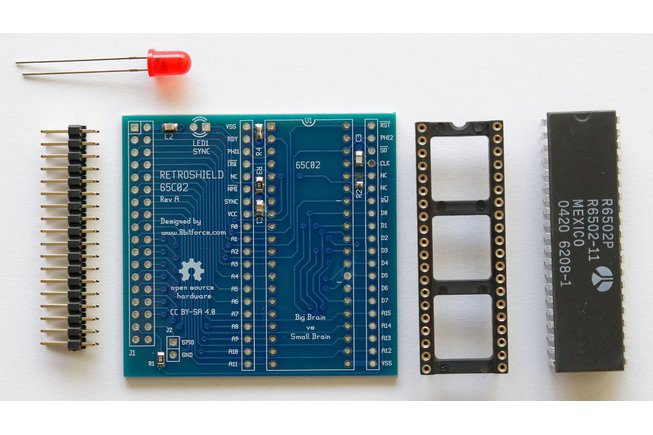
You likely won't learn much assembling something like that and as flooby notes, you'd not be getting the essence of what 6502 computing is all about.
x86?  We ain't got no x86.  We don't NEED no stinking x86!
Jmstein7
Posts: 379
Joined: 30 May 2021

Re: Building the C02 Pocket PCB

Post by Jmstein7 »

Don't misunderstand - I've already had the experience of building a couple of breadboard computers using 65xx chips, made a little monitor using xmodem to load programs into RAM, etc. I'm just trying to cut down on the wires, and the problems that come with them. And, no, I'm not running a 65c02 with an arduino, either :wink: It's the form-factor. I want to be able to have, like, a modular design that doesn't require an afro-full of wires each time I want to make a change. Plus, pmod boards with chip sockets would be great with xilinx boards.

Jon
User avatar
floobydust
Posts: 1394
Joined: 05 Mar 2013

Re: Building the C02 Pocket PCB

Post by floobydust »

Jmstein7 wrote:
Don't misunderstand - I've already had the experience of building a couple of breadboard computers using 65xx chips, made a little monitor using xmodem to load programs into RAM, etc. I'm just trying to cut down on the wires, and the problems that come with them. And, no, I'm not running a 65c02 with an arduino, either :wink: It's the form-factor. I want to be able to have, like, a modular design that doesn't require an afro-full of wires each time I want to make a change. Plus, pmod boards with chip sockets would be great with xilinx boards.

Jon
Okay, so I guess I'm still not grasping exactly what you're trying to do or accomplish with the 6502. You linked the Tindie shield stating it would be perfect, which shows it attached to an Arduino... and my response was specific to what you linked to. So perhaps you didn't fully explain what it is you liked about the shield and how you plan to use it?

I also prefer to avoid extreme prototyping... get enough bits and pieces working, then create the final schematic and make a PCB to implement. It's pretty easy these days, compared to the 70's! Also, I'm not 100% certain on what you reference as a "pmod board". Digilent has their own specification and a large offering of boards for this. It might be useful to provide more detail on what you think you want to make as a CPU pmod board and what you're going to connect it to as well as what you expect it to do and the benefit from it. I'm just suggesting here.... and... might as well start a new thread on this, as this has strayed quite a bit.
Jmstein7
Posts: 379
Joined: 30 May 2021

Re: Building the C02 Pocket PCB

Post by Jmstein7 »

floobydust wrote:
It might be useful to provide more detail on what you think you want to make as a CPU pmod board and what you're going to connect it to as well as what you expect it to do and the benefit from it. I'm just suggesting here.... and... might as well start a new thread on this, as this has strayed quite a bit.
Agreed. What would the proper forum category for the new thread be?

Jon
User avatar
enso
Posts: 904
Joined: 29 Sep 2012

Re: Building the C02 Pocket PCB

Post by enso »

BigDumbDinosaur wrote:
...As for soldering, that is a basic skill required in the homebrew computer hobby, just as being able to measure and stir ingredients is a basic skill required of those who are interested in the culinary arts...
I'd say soldering is more like using a knife for cooking. It is pretty slow and awkward when starting out and after a while you get faster and make fewer errors. And maybe get a blister or two along the way.
In theory, there is no difference between theory and practice. In practice, there is. ...Jan van de Snepscheut
User avatar
GARTHWILSON
Forum Moderator
Posts: 8773
Joined: 30 Aug 2002
Location: Southern California
Contact:

Re: Building the C02 Pocket PCB

Post by GARTHWILSON »

Jmstein7 wrote:
Agreed. What would the proper forum category for the new thread be?
How 'bout Hardware.
http://WilsonMinesCo.com/ lots of 6502 resources
The "second front page" is http://wilsonminesco.com/links.html .
What's an additional VIA among friends, anyhow?
Edzard
Posts: 8
Joined: 14 Dec 2003
Location: Eindhoven - Holland

Re: Building the C02 Pocket PCB

Post by Edzard »

Hello All,

Today the PCB's arrived!
PCBs.jpg
They look good!


Best regards,

Edzard
User avatar
BigDumbDinosaur
Posts: 9425
Joined: 28 May 2009
Location: Midwestern USA (JB Pritzker’s dystopia)
Contact:

Re: Building the C02 Pocket PCB

Post by BigDumbDinosaur »

Edzard wrote:
Today the PCB's arrived!
PCBs.jpg
They look good!
That they do.
x86?  We ain't got no x86.  We don't NEED no stinking x86!
User avatar
floobydust
Posts: 1394
Joined: 05 Mar 2013

Re: Building the C02 Pocket PCB

Post by floobydust »

Yes, the PCBs do look quite nice (in blue). PM me... I'll send you a utility program that you can load to setup the RTC and format the Compact Flash drive so you can use it with DOS/65. Granted, it's not quite at a 1.00 version, but it certainly helps in sorting out the RTC setup and getting the CF Card accessible from DOS/65.

Note: DOS/65 doesn't do anything with the RTC... at least not yet. I'm hoping that Richard Leary will eventually provide support for the RTC, time will tell.
User avatar
BigDumbDinosaur
Posts: 9425
Joined: 28 May 2009
Location: Midwestern USA (JB Pritzker’s dystopia)
Contact:

Re: Building the C02 Pocket PCB

Post by BigDumbDinosaur »

floobydust wrote:
Note: DOS/65 doesn't do anything with the RTC... at least not yet. I'm hoping that Richard Leary will eventually provide support for the RTC, time will tell.

Which RTC did you use in the unit?
x86?  We ain't got no x86.  We don't NEED no stinking x86!
User avatar
floobydust
Posts: 1394
Joined: 05 Mar 2013

Re: Building the C02 Pocket PCB

Post by floobydust »

BigDumbDinosaur wrote:
floobydust wrote:
Note: DOS/65 doesn't do anything with the RTC... at least not yet. I'm hoping that Richard Leary will eventually provide support for the RTC, time will tell.

Which RTC did you use in the unit?
Maxim DS1511Y... sorted out the BIOS and the utility to set it up for date/time... all working quite well now. I opted to set the last two bytes of the NVRAM to "KM" as a signature, showing that the RTC is present. Once BIOS detects it (setup by the utility program), it copies the time/date to the BIOS variables on startup. The BIOS code manages date/time after that, else defaults to EPOCH time if the RTC is not found.
User avatar
BigDumbDinosaur
Posts: 9425
Joined: 28 May 2009
Location: Midwestern USA (JB Pritzker’s dystopia)
Contact:

Re: Building the C02 Pocket PCB

Post by BigDumbDinosaur »

floobydust wrote:
BigDumbDinosaur wrote:
floobydust wrote:
Note: DOS/65 doesn't do anything with the RTC... at least not yet. I'm hoping that Richard Leary will eventually provide support for the RTC, time will tell.

Which RTC did you use in the unit?
Maxim DS1511Y... sorted out the BIOS and the utility to set it up for date/time...
I thought you had source code for DOS/65. If so, surely it shouldn't be difficult to get time-and-date services going.
x86?  We ain't got no x86.  We don't NEED no stinking x86!
User avatar
floobydust
Posts: 1394
Joined: 05 Mar 2013

Re: Building the C02 Pocket PCB

Post by floobydust »

Yes... I have full source code for DOS/65. I started with Richard's most recent version 3 ROM based code. Initially, I kept the CCM and PEM code identical to what he sent. All I changed was the SIM code and wrote a monitor layer to interface to my BIOS. I later rewrote the SIM and included the code to directly interface to my BIOS, which saved some ROM space and also reduced some overhead. I later modified his CCM and PEM modules to take advantage of the CMOS instructions and addressing modes and reduced ROM space even more.

However, there is no code for implementing time/date. The calls are basic RTS functions. I haven't yet looked at doing this, as I would prefer to have Richard's input on how he would want this added in. I do think it would be a nice addition to the code base. The same can be said for using a second UART port for Reader/Punch functions... as the calls are there but just RTS functions. This part I will add in at some point, as my next SBC will use a 28L92 UART.

The current DOS/65 source code (now 3.03) is on my GitHub page.
Post Reply