-Tor
Experimental IO (including usb LPT ports) on the modern PC
Re: Experimental IO (including usb LPT ports) on the modern
Moosfet wrote:
Also, the auto-logout time-out in this forum needs to be greatly extended. Every time I hit submit it's like "you need to log in again" [..]
-Tor
Re: Experimental IO (including usb LPT ports) on the modern
(I think the issue here is that the form submission times out if you take too long to compose a reply. It's always worth a quick ^A ^C to get the text into your paster buffer before submitting.)
- GARTHWILSON
- Forum Moderator
- Posts: 8773
- Joined: 30 Aug 2002
- Location: Southern California
- Contact:
Re: Experimental IO (including usb LPT ports) on the modern
Tor wrote:
Moosfet wrote:
Also, the auto-logout time-out in this forum needs to be greatly extended. Every time I hit submit it's like "you need to log in again" [..]
Moosfet wrote:
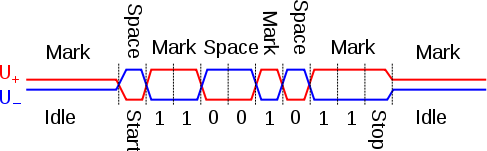
Anyway, there are a few things that make serial ports ****. First of all, the +/- voltages are a PIT* to work with
Quote:
, but to make things worse, the voltages aren't even well-defined. I think the "official" specs are that the voltages are anywhere from 3 to 15 volts. So you end up with devices that are looking for at least +/- 10 volts since the person who designed them had a serial port that output +/- 12 volts, but the device you have only puts out +/- 3, and so the connection doesn't work. It's also just terrible in that you now need -12, +5 and +12 volts for your project, all to support some idiotic signal voltages.
I have never had any problem with RS-232 reliability. In the decades I've been using it, I don't think it has ever misinterpreted a bit or given any errors as long as the transmitting and receiving speed and numbers of bits matched. (I've never used parity.) An advantage RS-232 has over USB is that it can go long distances, at least hundreds of feet. (The old 50-foot claimed limitation certainly does not apply to any line drivers made in the last 30 years.) If you don't need the fastest speeds (as you probably won't be using RS-232 to download pictures or videos), you probably won't have any problem at one or two thousand feet. This is one of the reasons it is still used a lot in industrial environments, on huge factory floors. Forum member BigDumbDinosaur writes,
- The longest hard-wired TIA-232 [the newest name for RS-232] run was 272 feet, which drove a terminal at 38.4Kbps without any problem. [...] At no time did we ever experience any TIA-232 anomalies due to cable length. [...] Toward the tail end of the era where we regularly installed serial hardware (up to about 2001), runs of several hundred feet using CAT5 UTP cable were routine. I know from application experience that 115.2Kbps is readily achievable on CAT5 UTP cable over a distance of 325 feet.

RS-422 and -485 can go both much farther and much faster. RS-422 can do 10Mbps at 40 feet, and RS-485 can do 35Mbps at 33 feet. Both can go at least 90kbps at 3/4 mile. A rule of thumb for RS-485 max speed versus cable length is that the speed in bit/s multiplied by the length in meters should not exceed 10^8. Thus a 50-meter cable should not signal faster than 2 Mbit/s.
Quote:
The other nasty thing about serial is that it is serial. This means that you either need a UART and a microcontroller to read the data, or you can use a bunch of 74LS123 to time bits and bytes to control shift and latch registers
http://WilsonMinesCo.com/ lots of 6502 resources
The "second front page" is http://wilsonminesco.com/links.html .
What's an additional VIA among friends, anyhow?
The "second front page" is http://wilsonminesco.com/links.html .
What's an additional VIA among friends, anyhow?
Re: Experimental IO (including usb LPT ports) on the modern
jds wrote:
I work on a Mac, ...
The MAC driver for the cheap cables (prolific) is horrible and can cause crashes on the MAC and you never now the name of the device as the name is built from the USB enumerating tree which may change when you re-arrange devices, the only stable names are the built-in USB ports and the USB ports on the monitor and the keyboard (but on the keyboard they don't work as they announce them selves as requiring 500mA). However in the virtual machines (Linux and Windows) they work like a charm although you must always check which device or COM port you are using.
The FTDI driver for genuine FTDI cables however is very nice on the MAC. The device name is created using the serial-number, so regardless of the USB port you plug that cable in the same cable always gets the same device name, this is very handy and so I just put labels on my cables and always now which cable is which device.
However under Windows I have a lot of programmers and USB programmer cables and some of them use FTDI chips and some of those cables use non-genuine FTDI chips, and as you mentioned, once you install the FTDI drivers the non-genuine chips stop working. But it doesn't stop here, the FTDI driver for the USB cables conflicts with the driver for the USB->ISP interface from Atmel.
At the end I use the FTDI cables under MacOSX and the cheap cables in the VMs. And as they are so easy to use all my current projects have a 5V RS-232 interface to talk to the Mac or the VMs.
Another solution I was once using are the "IO Warriors" from Code Mercenaires http://www.codemercs.com/de/io they also provide SDKs and drivers for their devices for MacOSX, Linux and Windows and it was very easy to use them and write your own program that talks to the chips via USB. At least it was at that time I used them, even I as a complete noob regarding MacOSX programming was able to write a small programm with GUI that was able to receive IR commands via a IO Warrior that had a IR receiver attached to it and also was able to send text to a LCD display attached to the IO Warrior. Depending on the model their chips include direct support for RC5, I2C, SPI, etc. and they have starter kits.
Re: Experimental IO (including usb LPT ports) on the modern
Quote:
I know from application experience that 115.2Kbps is readily achievable on CAT5 UTP cable over a distance of 325 feet.
USB, on the other hand, suffers from its designers choosing to require a response to a certain command to come so soon after the command is sent that the speed of light prevents the cable from being longer than about 25 feet or so as the response simply won't be able to get back in time. So using a high-quality cable with proper signal termination won't help with USB. When you see a 100 foot USB cable, it works by converting the USB protocol to something else over the length of the cable, then converting it back to USB at the other end, which is why such cables are so expensive. It's really quite annoying. I thought I'd use USB cameras as cheap security cameras, and bought a bunch of 10-ft USB extension cables. One extension cable works fine, but if I use two, the connection degrades to USB-1.1 speeds, and if I use three it stops working entirely. I even tried putting a hub at each step as a sort of repeater, but it just doesn't work.
In any event, what problems I had with both serial and parallel were certainly caused by something, and if that something were corrected then those problems wouldn't exist, but the main point I was trying to make was that, as a hobbyist trying to use this stuff for I/O with my projects, the parallel port was most difficult to use reliably despite its deceptively simple design, the serial port was OK outside of my two $5 UARTs (they both had the same problem), but the FT245R was incredibly easy as it just does what it's supposed to do with clean logic levels, high speed and high reliability, so it's the one that I have to recommend.
...though now that I think about it, it too wasn't always that easy. Initially I had a lot of problems with it. The first seemed to be caused by a flaky USB hub I was using, though I didn't discover that for the longest time. Instead I merely discovered that if I limited each write to 15 bytes or less the problem went away. After discarding that hub, I discovered I could go up to 4096, but that seemed to hit another problem, probably because Linux's USB drivers use a buffer of that size. Just now I tried disabling the limit entirely on my EEPROM programmer, and it still worked without issues. So I guess the driver problems are solved these days, but back in 2005 they were a constant bother.
Quote:
The device name is created using the serial-number, so regardless of the USB port you plug that cable in the same cable always gets the same device name, this is very handy and so I just put labels on my cables and always now which cable is which device.
In Linux the serial number similarly shows up in the names of the devices in /dev/serial/by-id/, but that wasn't always the case. Initially they were only shown in the system log, so I had some scripts that would sort through it and figure out the correct /dev/ttyUSB device. ...but that was a pain as every kernel upgrade seemed to bring a new format to the messages the scripts looked for. Eventually I learned about udev, and so I created a udev rule to name the device according to the serial number.
Just create a file named /etc/udev/rules.d/FTDI.rules and put this in it:
Code: Select all
ATTRS{idVendor}=="0403", SYMLINK+="FTDI/$attr{serial}"I'd forgotten all about this, but it's really so useful that it's a reason all in itself to use an FT240X rather than a serial or parallel port.
Quote:
once you install the FTDI drivers the non-genuine chips stop working
Quote:
But it doesn't stop here, the FTDI driver for the USB cables conflicts with the driver for the USB->ISP interface from Atmel
Quote:
"Log me in automatically every time I visit,"
Re: Experimental IO (including usb LPT ports) on the modern
Quote:
I wouldn't expect it to be a problem at any distance on a cable with a controlled impedance, assuming the voltage drop over the length of the cable isn't an issue and it is properly terminated with the same impedance at the end. I have no idea how it ever got the "it can only go 50 feet" reputation.
Where I'm coming from is that there's nothing about serial that should have a distance limit. It's like any other long-distance transmission over wire: You have to have a transmission line with a consistent impedance over the length of the cable and you have to terminate it with a resistance equal to that impedance. The only distance limit it should have is due to the quality of the cable (any changes in impedance will cause signal reflections) and the power loss over the cable, and so "serial data can only go 50 feet" is just silly.
For anyone who might not know about transmission line impedance, I'll link to this page which finally made me understand it years ago. It's probably worth reading from the beginning of the chapter, but that was the page I landed on. I had no idea what I was reading since I was looking for something else, but it seemed like an interesting thought experiment and so I kept reading and by the end was like "ooh, mind = blown!" It's one of my favorite web pages of all time just because of how excited I was to finally know why all of those coaxial T.V. cables said "75 ohms" on the side.
- BigDumbDinosaur
- Posts: 9426
- Joined: 28 May 2009
- Location: Midwestern USA (JB Pritzker’s dystopia)
- Contact:
Re: Experimental IO (including usb LPT ports) on the modern
BigEd wrote:
(I think the issue here is that the form submission times out if you take too long to compose a reply. It's always worth a quick ^A ^C to get the text into your paster buffer before submitting.)
x86? We ain't got no x86. We don't NEED no stinking x86!
- BigDumbDinosaur
- Posts: 9426
- Joined: 28 May 2009
- Location: Midwestern USA (JB Pritzker’s dystopia)
- Contact:
Re: Experimental IO (including usb LPT ports) on the modern
Moosfet wrote:
Quote:
I know from application experience that 115.2Kbps is readily achievable on CAT5 UTP cable over a distance of 325 feet.
Quote:
I have no idea how it ever got the "it can only go 50 feet" reputation.
x86? We ain't got no x86. We don't NEED no stinking x86!
Re: Experimental IO (including usb LPT ports) on the modern
BigDumbDinosaur wrote:
Quote:
I have no idea how it ever got the "it can only go 50 feet" reputation.
- BigDumbDinosaur
- Posts: 9426
- Joined: 28 May 2009
- Location: Midwestern USA (JB Pritzker’s dystopia)
- Contact:
Re: Experimental IO (including usb LPT ports) on the modern
Tor wrote:
Ah yes, I remember someone connecting a very long, shielded RS232 cable from the server room of one building to another building, at the place where I first started working. He connected the shielding to ground in both ends, not a good idea at the best of times, but in this case the AC system used ground as common return, and the other building had some issues so there was a 100V AC difference between the two buildings. Nice pyrotechnics followed.
x86? We ain't got no x86. We don't NEED no stinking x86!
- GARTHWILSON
- Forum Moderator
- Posts: 8773
- Joined: 30 Aug 2002
- Location: Southern California
- Contact:
Re: Experimental IO (including usb LPT ports) on the modern
Quote:
but in this case the AC system used ground as common return, and the other building had some issues so there was a 100V AC difference between the two buildings.
http://WilsonMinesCo.com/ lots of 6502 resources
The "second front page" is http://wilsonminesco.com/links.html .
What's an additional VIA among friends, anyhow?
The "second front page" is http://wilsonminesco.com/links.html .
What's an additional VIA among friends, anyhow?
- BigDumbDinosaur
- Posts: 9426
- Joined: 28 May 2009
- Location: Midwestern USA (JB Pritzker’s dystopia)
- Contact:
Re: Experimental IO (including usb LPT ports) on the modern
GARTHWILSON wrote:
Quote:
but in this case the AC system used ground as common return, and the other building had some issues so there was a 100V AC difference between the two buildings.
x86? We ain't got no x86. We don't NEED no stinking x86!
- GARTHWILSON
- Forum Moderator
- Posts: 8773
- Joined: 30 Aug 2002
- Location: Southern California
- Contact:
Re: Experimental IO (including usb LPT ports) on the modern
It sounds like time for optoisolators.
http://WilsonMinesCo.com/ lots of 6502 resources
The "second front page" is http://wilsonminesco.com/links.html .
What's an additional VIA among friends, anyhow?
The "second front page" is http://wilsonminesco.com/links.html .
What's an additional VIA among friends, anyhow?
Re: Experimental IO (including usb LPT ports) on the modern
Traditional RS232 actually uses optoisolators, but when someone adds shielding then the problems start - if both ends are connected.
Experimental IO (including usb LPT ports) on the modern PC
In a post elsewhere, Ed summarizes the distinctly intriguing FT4232H. (emphasis added)
-- Jeff
Edited to add: the data sheet for the chip, and an image and datasheet for the FT4232H-56Q Mini Module.
BigEd wrote:
I checked the datasheet. It's a device with a USB side and a serial interface side. The USB side acts as a peripheral so it connects to a USB host. The serial interface side includes i2c and SPI modes which are driven by the chip, so the chip is the host. Also includes UART which can be bidirectional or unidirectional. Typically you might use UART mode and connect it to the UART on your own project. Either side can then send bytes to the other, and it's up to you what protocol you build on top of that. The chip also includes some GPIOs, so the host side can control those to bit-bang some other protocol, although I would guess only slowly.
Edited to add: the data sheet for the chip, and an image and datasheet for the FT4232H-56Q Mini Module.
Last edited by Dr Jefyll on Sat Jul 08, 2023 8:44 pm, edited 1 time in total.
In 1988 my 65C02 got six new registers and 44 new full-speed instructions!
https://laughtonelectronics.com/Arcana/ ... mmary.html