First micro or computing experiences

Topics related to older 6502-based hardware and systems including (but not limited to) the MOS Technology KIM-1, Synertek SYM-1, and Rockwell AIM-65.

Which micro (or CPU) did you first bond with?

6502 on a single board (KIM-1, OSI, Compukit, AIM-65, ...)
11
14%
6502 or similar in a computer (Pet, VIC20, C64, AppleII, Atari, NES ...)
43
54%
6800
0
No votes
6809 (Coco, Dragon32, Vectrex...)
0
No votes
8080 or 8085 (S100 or otherwise)
2
3%
z80 (TRS-80, Spectrum, MSX, TI calculator...)
7
9%
9900, SC/MP, 1802 or any other unusual micro
6
8%
Non-micro CPU
4
5%
68k (QL, Atari, Amiga, ...)
2
3%
x86 (IBM PC, ...)
5
6%
 
Total votes: 80

User avatar
BigEd
Posts: 11463
Joined: 11 Dec 2008
Location: England
Contact:

Re: First micro or computing experiences

Post by BigEd »

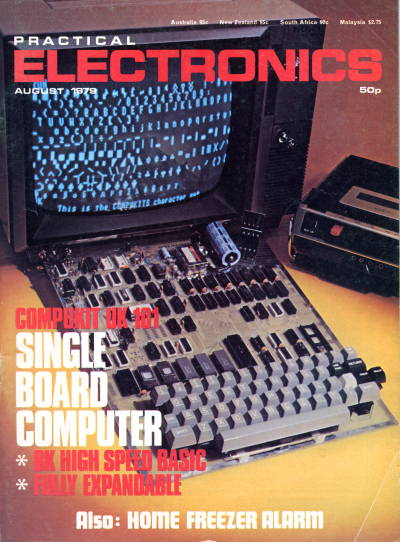
Great stories everyone! This page from July 1984 (indexed here) has a lot of parallels with my own story: I got into electronics by reading the monthly magazine Practical Electronics, and distinctly remember a Master Mind (cows and bulls) game in TTL one month followed closely by a microprocessor version in a later issue. The micro - might have been the CHAMP based on SC/MP - was much the simpler design and yet a very general system. So I kept my eye on the adverts for the various NASCOM and Mk14 and AIM65 products (I may have my chronology wrong here) and loitered around any computer shops which I could find and even went so far as to hire a PET for a single day by clubbing together with a couple of friends. That was a silly idea! We couldn't realistically stay up all night, we had no plan as to what to do, and the fumes from the coal fire got to me too. You need oxygen to program.

Image

But my first owned machine was a Compukit UK101 - a single-board 6502-based kit, pretty much an Ohio Superboard clone - apparently came out in '79. Also my first real soldering experience - I had to solder it twice, but it did then work. Cassette storage, of course, and display with a UHF modulator to one of a series of refurbished ex-rental monochrome televisions. Probably quite the fire risk, and of course my PSU construction didn't feature any insulation. I would have bought my Zaks book at that time.

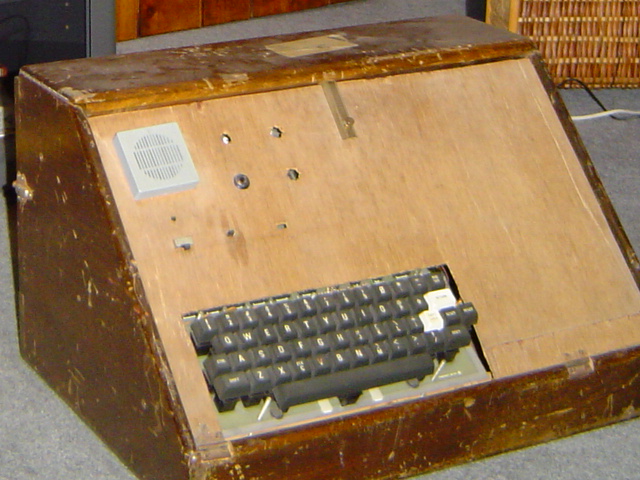
Image.
Slideshow here - this was the second case, the first being a diagonally sawed-off drawer from home with a plexiglass cover. I'm sure I didn't ask for permission to saw that drawer.

(I'd already been fascinated by computers for some time: I'd lapped up one or two books - one of the first being the How and Why Wonder Book of The Computer and another being Alan Wilkinson's homebrew CPU book mentioned in this thread.)

I had had access to a local university computer (an ICL? don't know) via a link from school, and also a weekly card deck shuttle - but that was BASIC, so no CPU exposure. I'd also gone through quite a number of calculators, sometimes taking advantage of no-quibble money-back guarantees (Sinclair Programmable was one - one memory and just 36 keystroke program capacity) but I was out-manouevred by one salesman and actually bought a TI-57, my first programmable calculator. Much less capable than Garth's but the same general architecture. I think it had just 50 steps, and no storage peripheral or even non-volatile memory. The TI-59 was the top-line model but much too expensive.

A few years after the Compukit I got a BBC Micro - probably 1982 - an excellent hardware and software architecture, if a little low on RAM by C64 standards. I think that was mostly funded from excess cash from my student grant - those were the days, but as I don't drink I had a lot of beer money left over. (The Compukit was funded from paper round, pocket money, birthday and Christmas money and, I think, a parental subsidy.)

The Beeb of course has a two-pass assembler built into the BASIC, whereas the Compukit had only a one-line monitor to offer. So that was a much more comfortable machine to work with, even still with only cassette tape, until eventually I bought a (double density!) disk interface and dual drive. I bought a RAM disk at some point too, or a sideways RAM expansion as it was known.

At Uni there was a short course using a 6800 dev board - very disorientating to have two accumulators and a single but wide index register.

At some point I got interested enough in the idea of the Archimedes (and the ARM) to buy the manuals for the machine and the book on assembly language programming the ARM, but the machine itself remained priced out of reach.

After that I went for Amiga rather than Atari, and eventually got a 16Mbyte P75 PC when I heard about Linux - although we also ran Windows on it for some particular purpose. That was in '95. Since when it's been mostly x86, and no assembly for me, until emulators popped up and ARM dev kits became cheap. I did once patch a byte or two of an x86 binary, and I once did a course on 8051, but mostly I've remained a 6er not an 8er.

Here's my Beeb, or maybe not mine, from our 65816 upgrade adventures of 2009.

Oh, I should mention my Transputer accumulation! I did a course on that around '89, and indeed worked at Inmos for some time, but no assembly.

Cheers
Ed

[Edit: fix broken links]
Last edited by BigEd on Wed Mar 27, 2019 10:01 pm, edited 2 times in total.
User avatar
BigDumbDinosaur
Posts: 9425
Joined: 28 May 2009
Location: Midwestern USA (JB Pritzker’s dystopia)
Contact:

Re: First micro or computing experiences

Post by BigDumbDinosaur »

White Flame wrote:
Before actually learning what was what, I started typing in all the sample programs from the user's manual, and saw the REM statements stating what the program was doing. Sure, there was all this complex gobbledegook inbetween, but I had no clue what that was for. Thinking I understood enough about what was going on, my first attempt at writing a game in BASIC was a list of 4 or 5 lines of REM statements, roughly describing how the screen should be drawn and what the player should do. Naturally, it didn't do anything when RUN. I learned better after that. :roll:
Au contraire! The program did do something when you ran it. It quietly said to itself "Who's the dummy that wrote this program?" :lol:
x86?  We ain't got no x86.  We don't NEED no stinking x86!
User avatar
BigDumbDinosaur
Posts: 9425
Joined: 28 May 2009
Location: Midwestern USA (JB Pritzker’s dystopia)
Contact:

Re: First micro or computing experiences

Post by BigDumbDinosaur »

HansO wrote:
For me it is (and still is!) the KIM-1.

I still have it, it does work and is original.
Cool! It looks like it never lacked for use.
x86?  We ain't got no x86.  We don't NEED no stinking x86!
Simon
Posts: 155
Joined: 16 Apr 2007
Location: Auckland, New Zealand
Contact:

Re: First micro or computing experiences

Post by Simon »

Home made computers look so wonderful! I'll post some pics later of my Orwell machine which is migrating from breadboard to Veroboard to, eventually, PCB. My construction technique are equally as, err rustic, shall we say!

My first machine was a Vic20 I got when I was 10. Before getting it I remember reading every 80s Usborne computer book I could get my hands on and I was writing my own little Basic programs before I even got the machine. I am now recollecting all those books by the way and reviewing them using my Orwell computer. That's its purpose I guess. Been meaning to post a link to them here: http://www.asciimation.co.nz/bb/category/usborne I am sure others here remember those books as fondly as I do.

I then moved on to an Apple 2+ shortly replaced by a 2e my father was able to get with an educators discount. I recently found the original receipt and it was a lot of money when he bought it for me back in 86. I never really appreciated how much. It paid off though as computers have done me well career wise since. From there I went to Amigas which proved handy when I was at Uni where they used Macs and I was able to run an emulator on the Amiga at home. From there I went to PCs (which I am still on now).

I didn't really get into assembly language until much later when I started playing with PIC microcontrollers. My first 6502 assembler was only fairly recently when I build my beer brewing Bender and of course had to build him a functional 6502 brain. Basically a cut down version of a 1541 Commodore drive for hardware and some (very) simple software to play audio samples.

Orwell was the desire to build a complete 6502 machine with BASIC that could actually be useful for something. I still find it amazing though that now I can build a machine myself that is basically equivalent to the machine I started with 30 years ago and understand exactly how it all works. Back then it was all such a mystery!

Simon
User avatar
Dr Jefyll
Posts: 3525
Joined: 11 Dec 2009
Location: Ontario, Canada
Contact:

Re: First micro or computing experiences

Post by Dr Jefyll »

Simon wrote:
... my beer brewing Bender ...
I wanted to see Bender, but he's not immediately obvious when you follow the link Simon provided. However, in Simon's "About" section there is a link to several other links, including Bender. Apparently the About section is for "projects and hobbies that don’t quite deserve their own page on my main site."

You're too modest, Simon. Bender is magnificent! :D

-- Jeff
In 1988 my 65C02 got six new registers and 44 new full-speed instructions!
https://laughtonelectronics.com/Arcana/ ... mmary.html
Simon
Posts: 155
Joined: 16 Apr 2007
Location: Auckland, New Zealand
Contact:

Re: First micro or computing experiences

Post by Simon »

Dr Jefyll wrote:
Simon wrote:
... my beer brewing Bender ...
I wanted to see Bender, but he's not immediately obvious when you follow the link Simon provided. However, in Simon's "About" section there is a link to several other links, including Bender. Apparently the About section is for "projects and hobbies that don’t quite deserve their own page on my main site."

You're too modest, Simon. Bender is magnificent! :D

-- Jeff
I have many projects which vary a lot! Cars, computers, jet engines, puppets, railway stuff, random other things. These days it seems no one does web pages any more, it's all just blogs. Here today, gone tomorrow stuff really. But yes, that's the link to my 'main' page :)

Simon
User avatar
PaulF
Posts: 143
Joined: 08 Dec 2008
Location: Brighton, England

Re: First micro or computing experiences

Post by PaulF »

The first computers I encountered were BBC Micros, of which my school had a grand total of five! They were a nice machine but ever so expensive!

The first computer I 'lifted the cover' of was an ORIC-1. I learnt to program the 6502 on this and also found out how easy it was to upset a machine that runs on the interrupts generated by a 6522! By the time it finally died I had added a variety of home-made I/O devices to it, none of which really did anything more than flashing lights and read toggle switch inputs but I learnt an awful lot!
Shift to the left,
Shift to the right,
Mask in, Mask Out,
BYTE! BYTE! BYTE!
ElEctric_EyE
Posts: 3260
Joined: 02 Mar 2009
Location: OH, USA

Re: First micro or computing experiences

Post by ElEctric_EyE »

I'm not sure I cast the right vote because I had 2 levels of 'bonding'. The first computer I was exposed to was either a KIM-1 or AIM-65 so I voted for that. I never did any programming or anything because I was too young, probably about 7 or 8. I bonded with it because I played some of the simple games my father had on it daily.
I bonded even more with the C-64 a couple years after it came out. By then I was able to learn a little Basic and some machine language. In 4 years I was able to do software character scrolling. Also plotting of audio waveforms using an 8-bit ADC. I did this for a high school science fair project.
Compute! magazine was a GREAT way to learn the machine.
rfpowerdude
Posts: 8
Joined: 11 Dec 2013

Re: First micro or computing experiences

Post by rfpowerdude »

There is no selection for 6502 in an embedded application. That was my first experience. 1984 working for Mieco, Inc. as a tech. They manufactured LORAN navigating computers. 6502 was the heart of it. I read everything I could about the 6502 at the time. I thought it was the greatest thing ever. I was 19. I definitely bonded with the 6502...
joe vitek
Melbourne, Fla
User avatar
jac_goudsmit
Posts: 229
Joined: 23 Jun 2011
Location: Rancho Cucamonga, California
Contact:

Re: First micro or computing experiences

Post by jac_goudsmit »

For those who don't know: I grew up in the Netherlands and emigrated to the United States in 2000. (EDIT: I just noticed I don't have an entry in the introductions thread, so let this be it :-) )

In the 1970s, when computers were rooms full of metal cases that some people had heard of but no-one had actually seen, I read about them in books from the library like the Dutch translation of the How and Why Book of Robots and Computers that Ed already mentioned. The first time I actually was in the same room as a computer was at a friend's house: his dad worked for the police and they had a PET-2001 at home. I wasn't allowed to touch it. My friend showed me that it could load programs (games such as Hunt the Wumpus and Space Intruders) from cassette tape. This must have been in 1978, when I was about 11.

When I was 12 and went from primary school to high school (I'll just call it high school for ease of discussion), I found out the school had a PET-2001 too. The only person in the school who used the computer was one math teacher (hello Mr. Verschuren). Sometimes he would have it sitting on a table in front of the class with the screen pointing towards him and away from the class, and he would work on it while the students were doing an assignment or a test or something. I was much more interested in the computer than in maths, so I tried to sneak a peek and figured out quickly that those line numbers were steps in the program, and there were statements like "if" and "goto" and "print" and "input". I didn't know about "for" or arrays so my first program that I wrote on paper to calculate students' grades was several pages long.

I don't remember exactly how it happened, but I somehow got permission to spend some time on the computer every once in a while (later on I definitely told some people that I had permission even if I didn't :-) ). By now there was also a CBM 4032 and a CBM 8032 in the tiny computer lab, and they were still mostly unused, except by the math teacher and me. One or two older kids would sometimes come in and do some stuff with the Comal language which I didn't know or understand. I learned Basic from a book that I got from the library by a Dutch writer whose name (I think) was K.L. Boon.

The school had a copy of 101 Computer Games by David Ahl, and was also subscribed to PET Benelux Exchange (of which I can find almost no information online even though the Courbois brothers who ran that Dutch Commodore computer club and magazine were active for a long time; I think they ran a shop for Amiga software and parts in the 1990s). The library also had the Radio Bulletin magazine for which HansO wrote articles. All of these magazines and books provided plenty of source code to spend lots of time after school typing programs into the computer. At first I used one finger (plus one finger on the shift key but on Commodore keyboards you hardly needed the shift key at all for Basic programs), then two fingers. I learned a lot from those programs, although it was mostly similar to learning how to solve Rubik's Cube from a book: I learned how it was done but not why. That would come later.

The second computer language I learned was 6502 Assembly from the Rodney Zaks book which also has been mentioned already. I remember spending a lot of time reading through the book (the original English version, not a translation) while I was in classes that didn't interest me, such as biology.

The school got a Commodore 64 in 1983 or so, and by then, some kids that were younger than me had started appearing in the computer lab. I didn't think the C-64 was that interesting because I thought Commodore should have done more to adapt the Basic interpreter to the new features, or should at least have left the machine language monitor in there. I didn't know there was no space for an ML monitor, or for Basic 4.0 which I had grown very fond of on the 4032. I already knew a lot of stuff about the PET-2001 and 4032 (less about the 8032 - it was incompatible with all the games), and I didn't want to learn all the new stuff that the C-64 had to offer; I was never interested in games much so those sprites and sounds were just silly things to play around with, they weren't intended for anything serious. Besides, those new kids were nice but they always hogged the C-64, playing games and stuff. Most of them weren't really that interested in programming as far as I can remember.

By now, the school took the computers a little more serious too: there were some computer programs for educational use (including a sort-of game that would let you simulate building a company and all the challenges of entrepreneurship; they organized competitions against other schools in the area with that game), and the lab had moved to a bigger room. But there were still no computer-related classes as far as I know. Another maths teacher asked me if I wanted to teach the kids in my class some things about computers during the last 5 minutes of one hour a week, and I did. I told them some things about Basic but I think most of them enjoyed it only because it made the math hour 5 minutes shorter :-).

In that time, my dad was working for the municipal automation department, and they had some open-door days. I remember being in awe of all the big computers they had (IBM mainframes, probably S/360's but I don't know for sure). VDU terminals, punch card machines etc. The first IBM PC's started appearing, and in 1984 my dad brought one of the first IBM PC's home so he could work on it (and so I could work on it too, after I finished my homework of course). I think he figured he could keep an eye on me instead of letting me be at the computer lab at school. The IBM PC changed to a PC/XT with a whopping 10MB hard disk (of which I was allowed to use 1MB in my own directory). I started learning what this thing could do, and typed a lot of listings from PC Magazine which my dad brought with him from work. My dad didn't do any programming at work except for writing Lotus 1-2-3 and Lotus Symphony macros. But he made sure that I had the DOS Technical Reference, the PC/XT Technical Reference (with BIOS listings), the IBM Macro Assembler, the IBM Pascal Compiler and all the other information that I needed to understand programs in the back of the American PC Magazine (which was more than a centimeter (half an inch) thick back then).

I also started modifying programs and making my own versions. For example PC Magazine produced a program that let you navigate directories and copy files, and another program that let you open text files and show them on the screen (without editing them), and I combined the two into one program that was very useful to organize a hard disk in the DOS days. It was called SV (for SuperVisor) and I let my dad take it to work with him. He told me a lot of people used it, and they installed it on PC's that they installed in the various municipal departments. I did summer vacation jobs at the place where my dad worked twice, when I was around 18. This was awesome, and I learned all kinds of things about how IBM PC's arrived in separate boxes, and how to assemble them, and which DIP switches to set, how to write CONFIG.SYS and AUTOEXEC.BAT files, how to create batch-file based DOS menu systems etc. Great times!

Around that time, I graduated from high school and the world was changing to PC's too, so my 6502 days were over (for the time being, anyway). I had never owned a Commodore but I still have fond memories of learning to type on a PET-2001 keyboard, and not liking the PC keyboard at all. Why the beep would you put all the numbers on the right, AND on top, but make it necessary to hold Shift to type a double quote??? When Num Lock was on, I thought, the keys on the right should be numbers and the keys on top should just be !"#$%^&*() or whatever, just like the Commodore keyboard, so that you could type Basic programs almost without using shift. I learned 10-finger typing around that time, just by doing it.

My dad changed jobs and started working for Philips, and this eventually got me the first computer I actually owned and could put in my bedroom, in 1988 or so: a Philips P3102 (PC/XT compatible), followed by a Philips P3316 (not sure about the type number; this was an 80386 computer at 16MHz that took 20 minutes to compile Hello.cpp in Visual C++ 1.0).

The first computer I actually bought, around 1992 or so, was a motherboard with a 486DX at 80MHz which I later upgraded to a DX4/100 processor; I built the motherboard into the Philips 386 case. It was a large desktop case that I used as a tower, and (somewhat amazingly) there was enough space for two MFM hard disks (one 5.25", one 3.5"), a Sony CD-ROM drive (which was twice as fast as the hard disks at 300KB/s!), a 5.25" floppy drive and a 3.5" floppy drive. I also bought a Commodore Amiga 500 around the same time, from a house mate, and hacked two MFM drives to it, which I talked about in a comment to this G+ post yesterday. I didn't get back into the 6502 until 2007 or so when I found out about this website, and Vince Briel's shop at brielcomputers.com and the fact that I must have passed by the Western Design Center office literally hundreds of times when I dropped my wife off at her job just before that, without knowing that that was the home of the 6502 now.

===Jac
White Flame
Posts: 704
Joined: 24 Jul 2012

Re: First micro or computing experiences

Post by White Flame »

jac_goudsmit wrote:
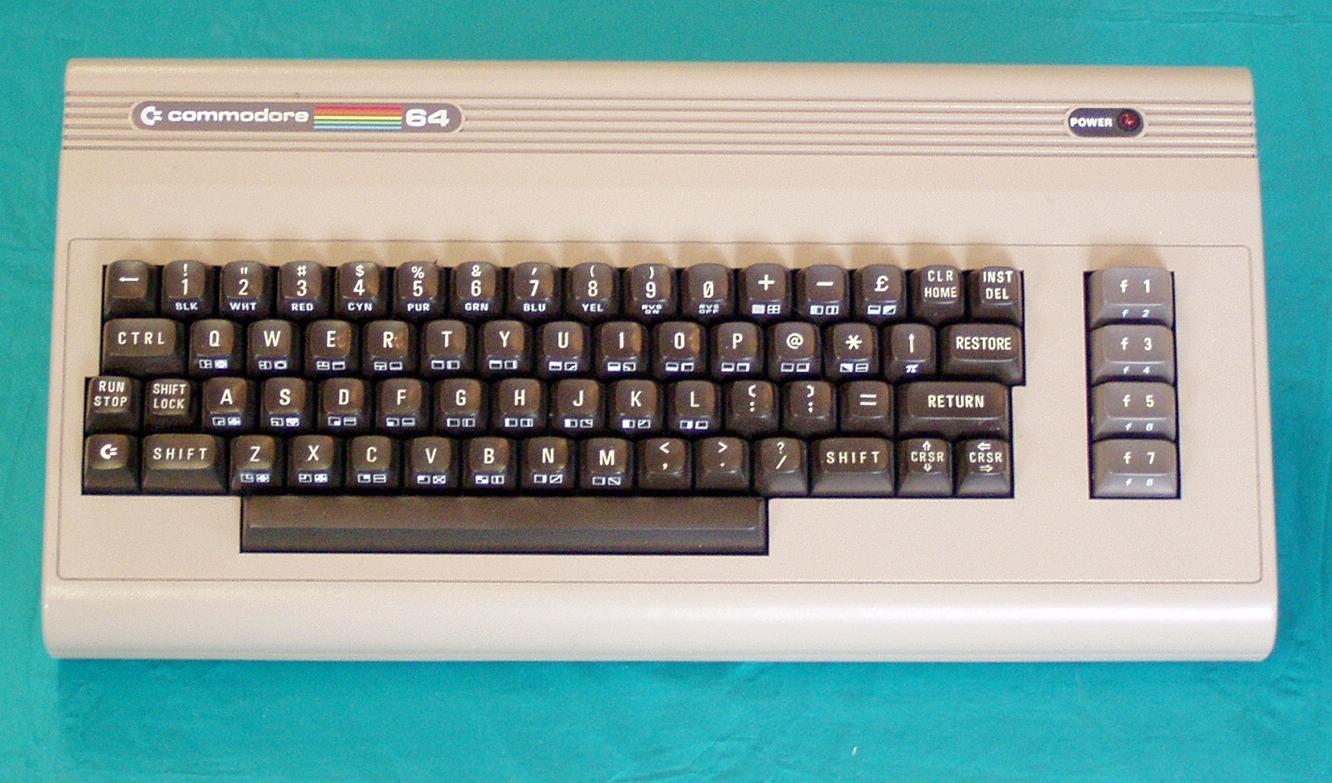
Why the beep would you put all the numbers on the right, AND on top, but make it necessary to hold Shift to type a double quote??? When Num Lock was on, I thought, the keys on the right should be numbers and the keys on top should just be !"#$%^&*() or whatever, just like the Commodore keyboard, so that you could type Basic programs almost without using shift.
I don't know which keyboard you're remembering, but at least the American and German C64 keyboards required using the Shift key for double quotes (Shift-2) and all the top row punctuation symbols. Did the Dutch get their own keyboard layout?

Pic of American C64 keyboard

Needs shift on PC, but not on C64:
  • Up-arrow/caret
  • UK pound
  • Plus sign
  • Asterisk
  • Colon
  • Left-arrow/underscore
Needs shift on C64, but not on PC:
  • Square brackets
  • Single quote
Of course, the PC keyboard has more symbols than the C64 (braces, pipe, backslash, tilde, etc), so it would need to shift a little more. But the C64 is in no way Shift-free when editing BASIC. The colon and plus signs are used often, so there is some actual advantage there. The rest are somewhat (asterisk) to almost never (everything else) used in BASIC.

What really bugs me switching between the two is that on the C64, parentheses are over 8 & 9, while on the PC they're over 9 & 0. That messes me up more than the weird place of the double-quote, since it's just 1 key off. *shakes fist at the heavens*


Edit: Oh wait, are you talking about the C64's Shift-Lock? Yes, that would make the top row all punctuation, but the rest of the keyboard becomes utterly useless. ;) Nobody I knew ever used that key.
Last edited by White Flame on Wed Dec 18, 2013 1:46 am, edited 1 time in total.
User avatar
jac_goudsmit
Posts: 229
Joined: 23 Jun 2011
Location: Rancho Cucamonga, California
Contact:

Re: First micro or computing experiences

Post by jac_goudsmit »

White Flame wrote:
I don't know which keyboard you're remembering, but at least the American and German C64 keyboards required using the Shift key for double quotes (Shift-2) and all the top row punctuation symbols. Did the Dutch get their own keyboard layout?
Ah yes, the C-64 (and the Vic-20 I guess) also had the numbers on top so you had to use shift there too. I guess that's another reason why I didn't like the C-64 that much at the time (nowadays I see things in a different perspective and I have to admire the engineering). But the PET-2001 and 4032 keyboards had a separate numeric keyboard and you didn't need to hold Shift to type the punctuation symbols in the top row.

https://www.google.com/search?q=commodo ... d&tbm=isch

===Jac
White Flame
Posts: 704
Joined: 24 Jul 2012

Re: First micro or computing experiences

Post by White Flame »

Yeah, but that's just weird. ;) For a fast, proper typist, it's much faster to use Shift and chording than it is to move the hand to a completely separate region of buttons and back.

For a Bible method typist ("Seek and ye shall find"), though, I can see it going the other way for sake of simplicity.
ElEctric_EyE
Posts: 3260
Joined: 02 Mar 2009
Location: OH, USA

Re: First micro or computing experiences

Post by ElEctric_EyE »

jac_goudsmit wrote:
For those who don't know: I grew up in the Netherlands and emigrated to the United States in 2000. (EDIT: I just noticed I don't have an entry in the introductions thread, so let this be it :-) )... I didn't get back into the 6502 until 2007 or so when I found out about this website, and Vince Briel's shop at brielcomputers.com and the fact that I must have passed by the Western Design Center office literally hundreds of times when I dropped my wife off at her job just before that, without knowing that that was the home of the 6502 now.

===Jac
That's pretty cool! I would at least post a simple intro, in the intro thread with a link here, so that way your post won't get lost over time. It's a great read IMO.
User avatar
jac_goudsmit
Posts: 229
Joined: 23 Jun 2011
Location: Rancho Cucamonga, California
Contact:

Re: First micro or computing experiences

Post by jac_goudsmit »

ElEctric_EyE wrote:
That's pretty cool! I would at least post a simple intro, in the intro thread with a link here, so that way your post won't get lost over time. It's a great read IMO.
Good idea! I'll do that.

===Jac
Post Reply