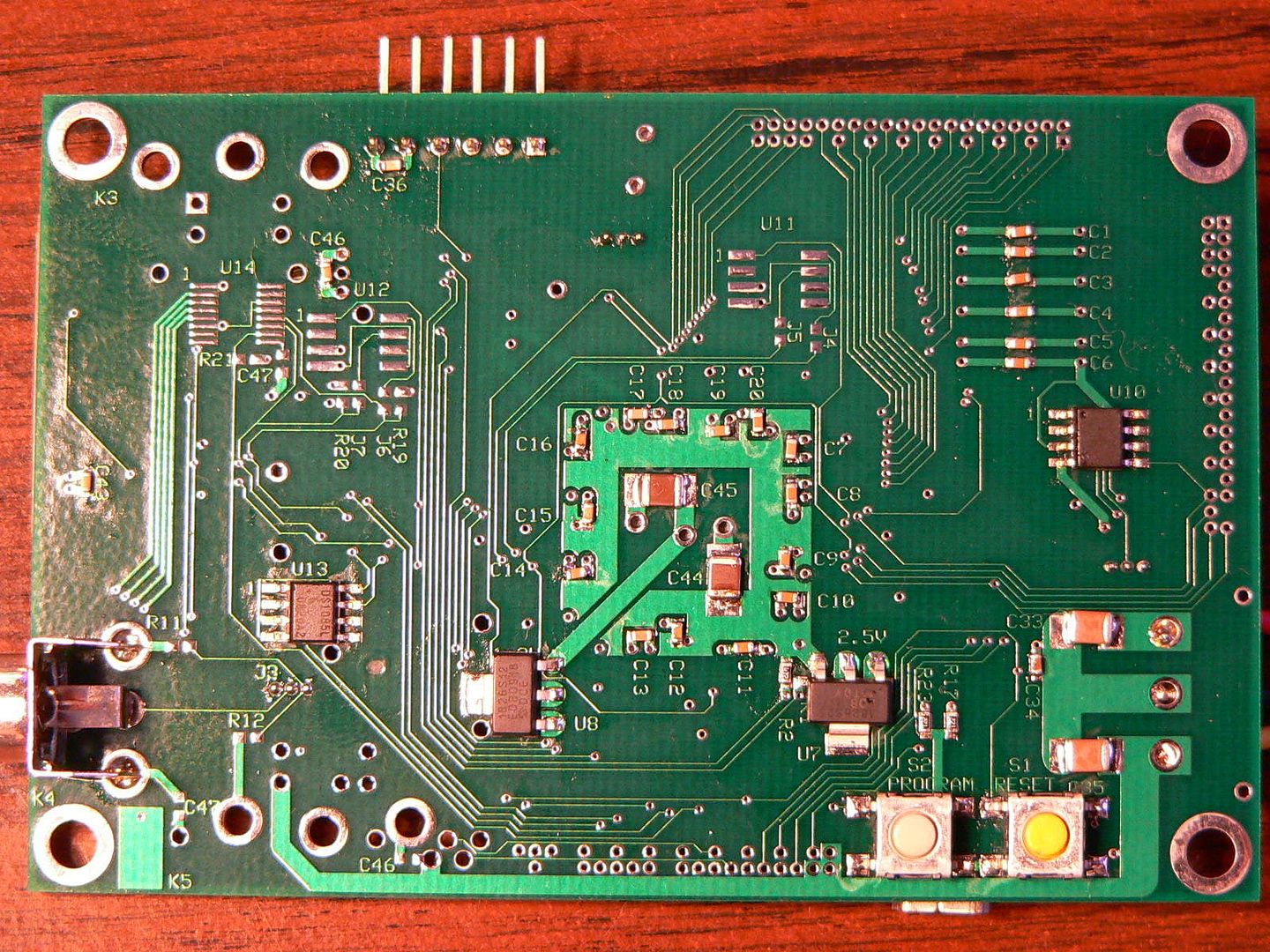
The easiest way to add holes is with a hand-held electric drill. (Sometimes as a drilling template I use a scrap of pre-drilled proto-board material.) Hand-held drilling is adequate only for very simple cases.
The board in the photo was drilled on a vertical milling machine, with handwheels used to control X-Y position of the table. That worked out very conveniently, since one revolution of a handwheel would result in .1" of travel.
 Even so, it was imperative to use a center punch first, or else the tiny drill would "walk" off the slightly convex solder pads. IOW I had to begin by using X-Y positioning to center-punch every location to be drilled. After the dimples from the punch were precisely located, I found it was easy to do the actual drilling simply by hand-locating the PCB under the drill bit; the bit is flexible enough find the dimple despite any minor misalignment.
Obviously manual drilling is for low-volume and prototypes only. And of course there's no plate-through when you drill the hole yourself.
Jeff
http://LaughtonElectronics.com


 Actually I don't know if that's true but a friend who was in Italy for the 2006 Winter Olympics said he ate like a king every night he was there and put on at least 10 pounds by the time he got ready to come home. He said the experience spoiled him for Italian restaurants in the USA.
 . The only issue is that i am living in a perfect vacation spot full of tourists from Italy, Germany, UK... but no IT/electronics industry whatsoever.