Thanks for starting this Ed. There have been a lot of posts on this in the past, usually because the subject came up in topics whose name wouldn't give it away, but it might be good to even make this a sticky, as an index to these.
Answering PCB-design questions:
viewtopic.php?p=16618#16618 (There are some other good links there too.)
viewtopic.php?p=15313#15313 shows a chainsaw line in a ground plane (although this one has analog and a switching power supply, not digital logic). Traces normally must not cross the chainsaw line except right near the small point that the ground planes are connected to each other.
about bus terminations:
viewtopic.php?p=13073#13073 and the posts around it
About getting good performance with wire-wrapped boards:
viewtopic.php?p=8074#8074 (and page 1 of that topic shows some wire-wrap tools)
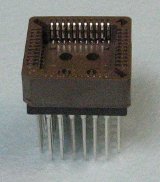
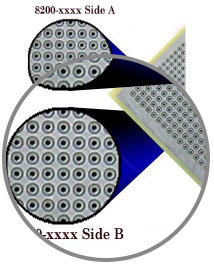
Edit: viewtopic.php?t=1985&start=41 shows WW board with a ground plane which is essential to higher-speed operation. I definitely recommend using at least a ground plane on one side like Twin Industries' 8100-series protoboards (
http://twinind.com/subcategory/plated-t ... ngle-power ) if not also a Vcc plane on the other side like Twin Industries' 8200-series protoboards (
http://twinind.com/subcategory/plated-t ... dual-power ) and keep parts as close together as possible and wire-wrap wires as short and straight as possible without straining them.)
BTW,
a lot of newbies want to run the processor's own buses off the board onto a backplane or to other boards that plug in. This makes it far more difficult to get good performance though, and usually lowers the maximum operating frequency, a lot. I have found it is better to go through I/O ICs like the 6522 VIA for anything that's not on the same board. Doing this generally preserves the performance more than enough to offset the loss of being able to directly read or write other ICs that are not on the same board. This is also related to my constant encouragement to take advantage of the thousands of synchronous-serial ICs on the market, primarily SPI (and especially taking advantage of our
65SIB spec.), I²C, and Microwire (which is very similar to SPI and can be put on the 65SIB). SPI can be handled at high speeds through Daryl's
65SPI chip (not to be confused with 65SIB which is the super-flexible interface method). Bit-banging SPI is very easy, and although slower, is still plenty fast for most uses. For the things that need the very fastest access like maybe video, put it on the same board with the processor. SPI can be almost as fast, and I²C which is slower but nearly the least work to hook up is good for things that don't need as much speed or don't transfer much data, an example being a digital temperature sensor or real-time clock or keyboard scanner which isn't going to change readings thousands (let alone millions) of times per second. These serial parts make a project far more manageable, since there are so few connections to make. Otherwise you begin to realize you may not live long enough to carry out the project you had envisioned.
Well known lecturer Dr. Howard Johnson, an industry guru in matters of high-speed digital design, says in one of his many articles in EDN magazine that he's seen engineers trying to figure out why their new design wasn't working, barking up all the wrong trees when the real problem turned out to be that the clock signal was not clean enough. The "clock circuit" involves the clock signal distribution, not just the oscillator. He's always talking about factors affecting multi-GHz digital designs; but most of the same things can bite at a few MHz with wire-wrap if the layout and construction are not good and the parts are too fast for it.
If you want to get into this kind of thing, you have a lot of studying to do on high-speed digital design. Dr. Howard Johnson has a lot of resources available on it. Start at
http://www.sigcon.com/Pubs/index.htm and
http://www.sigcon.com/Pubs/pubsAlpha.htm .
Johnson has a good book out called,
"High-Speed Digital Design: A Handbook of Black Magic" published by Prentice-Hall. His materials are generally more math-intensive than most of us on this forum need to go, but it is helpful to be aware of the effects that can cause the pitfalls he talks about. Some of the phenomena he addresses at hundreds of MHz on mostly well designed multilayer boards can bite us below 20MHz with wire-wraped circuits; so no, it's not irrelevant.
Edit: There's a brief article on avoiding AC-performance problems in my 6502 Primer, at
http://wilsonminesco.com/6502primer/construction.html. (Some of that info is in this topic, but you should find some additional helpful material there.)
Edit: There are links to Dr. Johnson's short articles on bypass-capacitor choice and layout at
viewtopic.php?f=10&t=2247&p=24906#p24906.