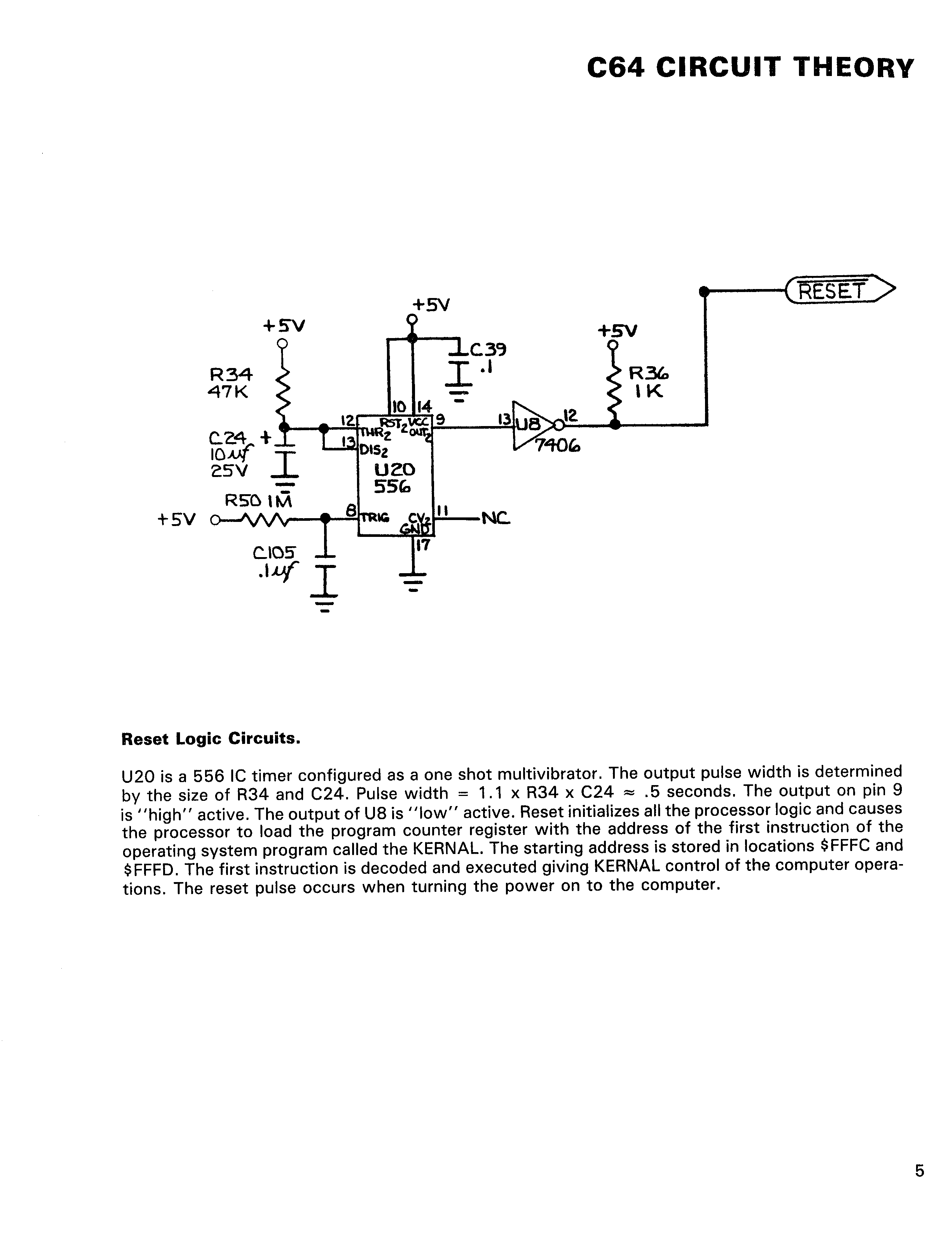
unless I'm in error here, Reset stays low from the time the power is turned on till the cap charges through the resistor and reaches the gate threshold of the 74LS14 at which time reset goes high and the cpu initializes..
Hmm, yeah.. I was looking at the photo, and I see the cap and resistor-&-diode near the 'LS14. So perhaps the reset circuit is simplified compared with what it really "ought" to be -- or maybe there
never was any issue. I admit I'm starting to wonder if this limitation on RST-true time is some sort of misunderstanding, or whether perhaps it applied only to a tiny minority of early chips. The MOS data sheet
here says nothing about it; my only info is from Garth's comment
here:
The CMOS 6502's reset timing is not critical since it does not have the heating problem that the NMOS 6502 had whereby the uP could be destroyed if you kept the reset line true for too long. IIRC, the maximum recommended reset time on those was 50 or 100 ms.
My curiosity is piqued, since I don't see how RST would alter power dissipation. Can anyone elaborate on this? (I notice that the KIM-1 schematic includes a 556 one-shot IC as part of the RST circuitry. But it is wired in a way that merely effects a debounce for the pushbutton; it does NOT limit the maximum time RST is low.)
Just wondering what the original problem was with the stepper code that made them have to invert the signal..
I wonder, too. And I could easily be mistaken. But, until a better theory presents itself, my bet is that they originally planned to use noninverting stepper-driver chips but had to effect a substitution. Yes this means their original design would briefly have had an all-coils-active condition at powerup, and that their '174 reset was ill-conceived, but lots of crazy stuff happens in this world. (I suppose an alternative explanation is that your board is a rare, early prototype. But the 74LS540 is a comparatively new chip -- pretty sure the only option would be an 'LS240 back when this design was developed.)
Thanks for keeping us posted on all this, falcon5252. I am following your project with interest -- and envy! Cheers,
Jeff
[Edit: additional detail re KIM-1 556 circuit: it is for debounce only]


 and verified this. So, we are left with very little info or evidence on the RST time limitation issue.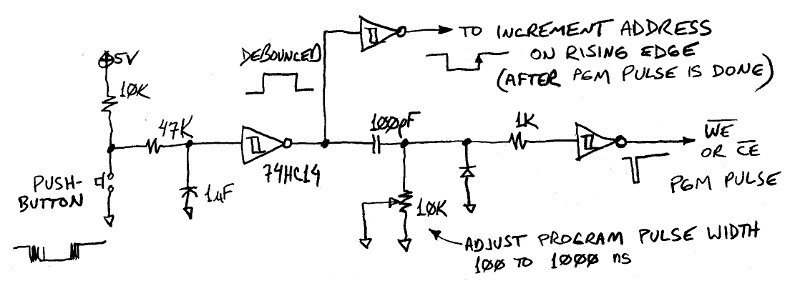
 555 means pulse, right? Not necessarily! You have to examine the circuit to find out for sure. (See my previous post, which passed yours in transit it seems). The presence of a 555 (or 556) multivibrator, aka "one-shot," doesn't always mean a one-shot pulse is being generated. It's easy to imagine that other people might've made the same mistaken assumption I made.